-
Courses
Courses
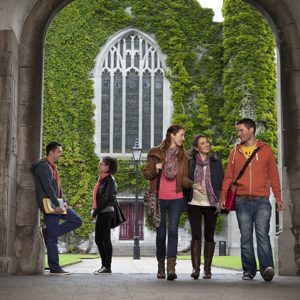
Choosing a course is one of the most important decisions you'll ever make! View our courses and see what our students and lecturers have to say about the courses you are interested in at the links below.
-
University Life
University Life
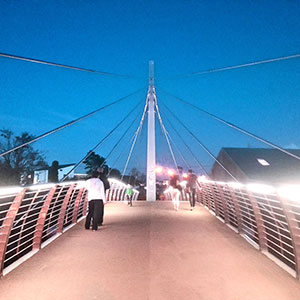
Each year more than 4,000 choose University of Galway as their University of choice. Find out what life at University of Galway is all about here.
-
About University of Galway
About University of Galway
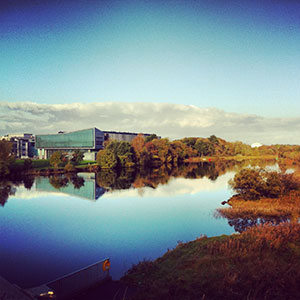
Since 1845, University of Galway has been sharing the highest quality teaching and research with Ireland and the world. Find out what makes our University so special – from our distinguished history to the latest news and campus developments.
-
Colleges & Schools
Colleges & Schools
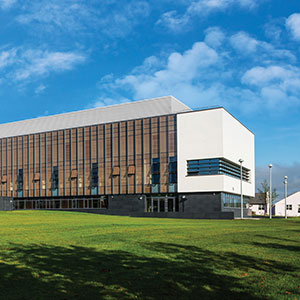
University of Galway has earned international recognition as a research-led university with a commitment to top quality teaching across a range of key areas of expertise.
-
Research & Innovation
Research & Innovation
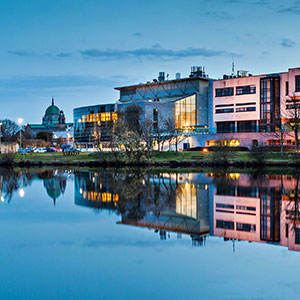
University of Galway’s vibrant research community take on some of the most pressing challenges of our times.
-
Business & Industry
Guiding Breakthrough Research at University of Galway
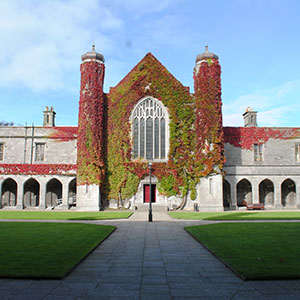
We explore and facilitate commercial opportunities for the research community at University of Galway, as well as facilitating industry partnership.
-
Alumni & Friends

Alumni & Friends
There are 128,000 University of Galway alumni worldwide. Stay connected to your alumni community! Join our social networks and update your details online.
-
Community Engagement
Community Engagement
At University of Galway, we believe that the best learning takes place when you apply what you learn in a real world context. That's why many of our courses include work placements or community projects.
 Accessibility & Language
February Fast-paced lives demand faster vision: ecology shapes how animals experience time
Fast-paced lives demand faster vision: ecology shapes how animals experience time
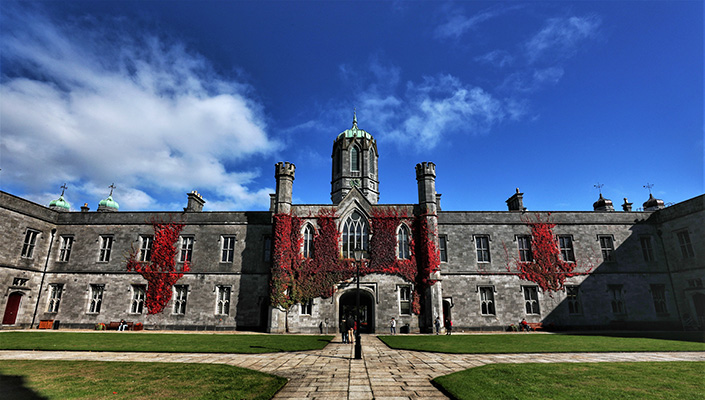
The Quadrangle, University of Galway
Feb
24
2026
Posted: 09:38 GMT
New international study co-authored by University of Galway researchers shows that how animals live and move determines how quickly they see the world
Animals do not just see the world differently from one another, they experience time itself at dramatically different speeds, researchers have revealed.
The major new study shows that the speed at which an animal lives and moves strongly predicts how quickly it can visually process the world around it.
The team of scientists - a collaboration between the University of Galway and Trinity College Dublin - analysed visual perception across 237 species in the animal kingdom, from insects and birds to mammals and marine life.
The findings, published in the international journal Nature Ecology & Evolution, provide the strongest evidence to date that ecology and evolution shape how animals perceive time.
The researchers found that that species with fast-paced ecologies - such as flying animals and “pursuit predators”, which chase fast, manoeuvrable prey - have much faster visual perception than slow-moving or sedentary species.
Dr Kevin Healy, co-author and Head of the Macroecology lab at the University of Galway’s School of Natural Sciences, said: “These results support a long-standing idea known as Autrum’s hypothesis, which in simple terms states that sensory systems evolve to match an animal’s way of life. What’s new is that we demonstrate this pattern across the entire animal kingdom, not just within small groups of species.”
Lead author Dr Clinton Haarlem, from Trinity’s School of Natural Sciences, said: “From a dragonfly tracking prey in mid-air to a starfish grazing slowly across the seabed, animals live in very different perceptual worlds. Our results show that these differences are not random. Instead, they are closely linked to how animals move, hunt, and interact with their environments.”
Measuring the speed of sight
To measure how quickly animals can process visual information, the researchers used a standard metric called “critical flicker fusion (CFF)”, which is the fastest rate at which a flickering light can be perceived as distinct rather than continuous. Higher CFF values indicate faster visual processing.
While humans typically perceive flicker up to around 60 Hz, some insects and birds can detect changes at more than 200 flashes per second, effectively experiencing a slower-moving world.
The team then tested how CFF relates to ecological traits such as locomotion, foraging strategy, body size, and light environment.
Among the key results were:
- Flying species have the fastest visual perception, with CFF values roughly twice as high as non-flying animals.
- Pursuit predators have significantly higher temporal resolution than species feeding on stationary or slow-moving food
- Light environment matters: species active in bright conditions generally have faster vision than those living in darkness or deep water
- In aquatic environments, smaller, more manoeuvrable species tend to see faster than larger ones
Dr Kevin Healy, said: “Species which live in low light environments and have slow lifestyles were found to have extremely slow visual systems. For example, the escolar, a deep sea fish, can see less than ten frames a second while deep sea isopods, a type of crustacean, can only see a couple of frames per second. For these species the world likely passes in a blur.”
Why perception speed matters
Fast visual processing allows animals to react to rapid changes, which is crucial for flight, hunting, and avoiding predators – but that comes at a cost. Rapid neural processing requires more energy, meaning high-speed vision is only favoured when it provides a clear ecological advantage.
The findings also raise concerns about the impacts of artificial lighting and flicker in human-modified environments.
Dr Haarlem continued: “These findings suggest species with fast visual systems may be especially vulnerable to flickering artificial lights. This could affect their hunting success, navigation, and impact predator–prey interactions, particularly in birds and aquatic predators. Understanding how animals perceive time helps us understand how they behave, evolve, and respond to environmental change. It reminds us that the world we experience is just one version of many.”
By linking ecology, evolution, and perception, the study ultimately highlights how animals inhabit fundamentally different sensory realities even when they share the same habitat.
The full study in Nature Ecology & Evolution is available at https://www.nature.com/articles/s41559-026-02994-7
Ends
Related News
15 October 2026
Ollscoil na Gaillimhe ag ceiliúradh agus beagnach 2,800 duine ag fáil a gcéime ag na searmanais bhronnta
15 October 2026
University of Galway celebrates almost 2,800 graduates at conferring ceremonies
14 October 2026
University of Galway awarded Jean Monnet Centre of Excellence
13 October 2026
European research partnership to strengthen child protection and wellbeing
9 October 2026
Atlantic Summit Galway 2026 concludes with release of Statement to support a sustainable and prosperous ocean future
Featured Stories
Thursday,
15
October
2026
Ollscoil na Gaillimhe ag ceiliúradh agus beagnach 2,800 duine ag fáil a gcéime ag na searmanais bhronnta
Thursday,
15
October
2026
University of Galway celebrates almost 2,800 graduates at conferring ceremonies
Wednesday,
14
October
2026