-
Courses

Courses
Choosing a course is one of the most important decisions you'll ever make! View our courses and see what our students and lecturers have to say about the courses you are interested in at the links below.
-
University Life
University Life
Each year more than 4,000 choose University of Galway as their University of choice. Find out what life at University of Galway is all about here.
-
About University of Galway
About University of Galway
Since 1845, University of Galway has been sharing the highest quality teaching and research with Ireland and the world. Find out what makes our University so special – from our distinguished history to the latest news and campus developments.
-
Colleges & Schools
Colleges & Schools
University of Galway has earned international recognition as a research-led university with a commitment to top quality teaching across a range of key areas of expertise.
-
Research & Innovation
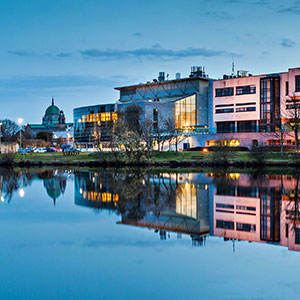
Research & Innovation
University of Galway’s vibrant research community take on some of the most pressing challenges of our times.
-
Business & Industry
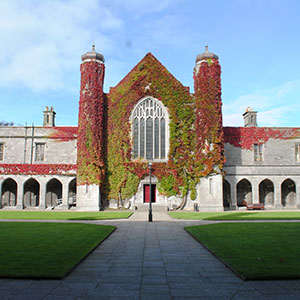
Guiding Breakthrough Research at University of Galway
We explore and facilitate commercial opportunities for the research community at University of Galway, as well as facilitating industry partnership.
-
Alumni & Friends
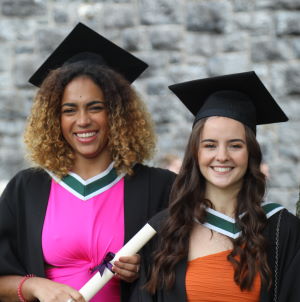
Alumni & Friends
There are 128,000 University of Galway alumni worldwide. Stay connected to your alumni community! Join our social networks and update your details online.
-
Community Engagement
Community Engagement
At University of Galway, we believe that the best learning takes place when you apply what you learn in a real world context. That's why many of our courses include work placements or community projects.
 Accessibility & Language
News & Events
Friday,
9
October
2026
Atlantic Summit Galway 2026 concludes with release of Statement to support a sustainable and prosperous ocean future
International ocean community unites behind Atlantic Summit Galway 2026 Outcome Statement, setting priorities for ocean knowledge, cooperation, and future leadership Atlantic Summit Galway 2026 concluded today with the release of the Atlantic Summit Galway 2026 Outcome Statement - a shared commitment to strengthen ocean knowledge, deepen Atlantic cooperation and invest in the next generation of ocean leaders. Representing the collective voice of the European Union and the Atlantic Ocean research community, the Statement positions the Atlantic as a strategic asset for Europe's future resilience, sustainability, security, and competitiveness. Jointly organised by the Marine Institute, University of Galway and Atlantic Technological University, Atlantic Summit Galway was an Associated Event of Ireland's Presidency of the Council of the European Union. More than 350 policymakers, researchers, scientists, industry leaders, innovators, educators, international organisations, coastal stakeholders and early-career ocean professionals from across Europe and the wider Atlantic region attended the event. Over two days, participants explored how research, innovation, skills, and international cooperation can support a sustainable, resilient, and competitive Atlantic future. Discussions culminated in the Atlantic Summit Galway 2026 Outcome Statement outlining three priorities for Europe's ocean future: making ocean knowledge a strategic investment priority, strengthening Atlantic partnerships and cooperation, and investing in skills and leadership. A shared statement for Europe’s ocean future The Atlantic Summit Galway 2026 Outcome Statement recognises that the Atlantic Ocean remains central to Europe's environmental, economic, and strategic interests while facing growing pressures from climate change, biodiversity loss, geopolitical instability, and increasing demands on ocean resources. The Statement calls for strengthened action across three priority areas: Make Ocean Knowledge a Strategic Investment Priority for Europe Delegates called for ocean knowledge to be recognised as a strategic capability and a cornerstone of Europe's future competitiveness, resilience, and maritime security. The Statement highlights the importance of sustained investment in ocean knowledge systems under the next EU Multiannual Financial Framework and Horizon Europe programme. Ocean knowledge systems comprise ocean observations, data systems, data products and services, research and innovation, expertise, infrastructures, networks, partnerships, and programmes. Strengthen Atlantic Partnerships and Cooperation The Summit reaffirmed the value of the All-Atlantic Ocean Research and Innovation Alliance and called for deeper cooperation across the Atlantic basin to address shared environmental, economic, and geopolitical challenges. Stronger international partnerships were recognised as essential to accelerating innovation, strengthening ocean governance, and maximising the benefits of research and investment. Invest in Skills and Leadership for Europe's Ocean Future Recognising that Europe's ocean ambitions will depend on people as much as infrastructure, delegates highlighted the need for continued investment in education, training, mentoring, and capacity-building. Particular emphasis was placed on empowering Early Career Ocean Professionals and creating stronger pathways into ocean research, innovation, policy, and governance. Taken together, these priorities reflect a shared recognition that Europe's future prosperity, sustainability and resilience will depend on its ability to generate, share and apply ocean knowledge through stronger partnerships, strategic investment, and skills development. Speaking at the release of Atlantic Summit 2026 Outcome Statement Dr Fiona Grant, Marine Institute and Chair of the European Marine Board, said: "From Galway, on Europe's Atlantic edge, a clear message has emerged: the ocean is not separate from Europe's future. It is central to it. Europe's prosperity, resilience, security, and competitiveness will depend on our ability to understand, protect, and sustainably manage our ocean. That is why the Atlantic Summit Galway 2026 Outcome Statement calls for action in three areas: making ocean knowledge a strategic investment priority, strengthening Atlantic cooperation and investing in the next generation of ocean leaders. What has been achieved in Galway is more than a statement of intent. It is a commitment to collective action. The Atlantic has always connected our nations. Today, it connects us through a shared responsibility to shape its future and ensure it remains a source of opportunity, sustainability and prosperity for generations to come." Professor Frances Fahy, Director of the Ryan Institute at University of Galway, said: "We are sending a powerful message: investment in ocean knowledge is an investment in Europe's future. At a time of growing environmental, economic, and geopolitical uncertainty, the ability to understand our ocean and act on that knowledge has never been more important. Meeting the challenges facing the Atlantic will require world-class research, international collaboration, and a shared commitment to turning evidence into action. University of Galway is proud to be part of a community helping to shape that the ocean future. Galway has become an internationally recognised centre of ocean research and innovation, and the Atlantic Summit has reinforced our region as a place where knowledge and ambition comes together to make a global impact.” Dr Deirdre Brophy, Strategic Lead, Marine and Freshwater Research Centre, Atlantic Technological University, said: "Europe's ocean ambitions will only be realised if we invest in people. The Atlantic Summit Galway 2026 Outcome Statement rightly recognises that skills, leadership, and talent are among our most important ocean resources. Delivering a sustainable and competitive blue economy will require graduates who can work collaboratively across disciplinary boundaries to address complex challenges. To drive change, they will need to develop skills in research, innovation and entrepreneurship, and be strongly connected to policy and to communities. We must empower the next generation to secure a sustainable future for our ocean by providing clearly defined and attractive career pathways and by investing in world-class marine education and training programmes. The Atlantic Summit has established an important international partnership. Through our continued co-operation we will create opportunity and deliver impact across the Atlantic region." From Galway to Europe and the Atlantic The message from Galway is clear: the ocean is not separate from Europe's future. It is central to it. By investing in ocean knowledge, strengthening Atlantic partnerships, and empowering future leaders, Europe can build a sustainable, secure, and competitive ocean future. The Atlantic has always connected us. Through the Atlantic Summit Galway 2026 Outcome Statement, participants have committed to helping shape its future together. ENDS
News Archive
Monday,
5
October
2026
Venomous snakes evolved striking colours to stand out
Wednesday,
30
September
2026
University of Galway recognised with RTPI Accredited Planning School status
Tuesday,
29
September
2026
Galway to host Atlantic Summit on the ocean knowledge shaping Europe’s future
Monday, 28 September 2026
Researchers from University of Galway have designed a visitor levy scheme for Ireland that could generate millions of euro in tax revenue for central government and local authorities. The policy brief ‘Designing a Visitor Accommodation Levy (VAL) for Ireland’ shows that with a well-designed scheme, revenues in excess of €200 million a year could accrue to the local government sector. In EU countries and in parts of the UK, “visitor levies” or “tourist taxes” charged by local councils on overnight paid accommodation are common. Ireland does not impose these levies. Both the 2024 Dublin City Taskforce and the 2026 Local Democracy Taskforce have recommended a levy on overnight stays. The research shows that a visitor levy would meet two objectives set out in the Programme for Government 2025 - Securing Ireland’s Future, namely, to broaden the tax base and to strengthen local democracy. The key design features of a Visitor Accommodation Levy (VAL) are the tax base, liability, coverage, exemptions, tax rate, administration, collection and use of funds. Actual revenues will depend on the base/coverage, the tax rate, exemptions and caps, and could raise an estimated €220 million per annum for the local authorities, according to the findings of the research. The research was undertaken by Dr Gerard Turley and Stephen McNena from the J.E. Cairnes School of Business & Economics at University of Galway, who also manage the www.localauthorityfinances.com website. The study used data from Fáilte Ireland's National Quality Assurance Framework registers, which contains 225,098 bedspaces as of January 2026. This figure excludes unregistered B&Bs, short term lets and on-campus student accommodation. Dr Gerard Turley, Lecturer in Economics at University of Galway, said: “Based on a fixed tax rate per person per night, we estimate that each €1 of a Visitor Accommodation Levy would generate €44 million per annum for the local authorities. A €5 tax rate per person per night would generate almost €220 million for the local government sector. Taking three examples from the 31 local authorities, this translates into €5.7 million for Waterford City and County Councils, €8.2 million for Galway County Council, and €46 million for Dublin City Council. “For hotels only, our estimates show that a €1 tax rate per person per night would generate the same revenue, circa €33 million, as a 1% room tax rate per night based on 2025/26 data for the number of hotel rooms, occupancy rates and the Average Daily Rate (ADR).” Stephen McNena, Lecturer in Economics at University of Galway, said: “Our research shows that revenues will depend on the categories of accommodation providers covered in the legislation, as well as the tax rates levied and any exemptions or caps. The choice of tax rate is a percentage rate or a fixed rate, to be applied per person or per room. As both approaches have advantages, we recommend that local authorities have the discretion to choose percentage rate or fixed rate at a level that is appropriate to the local circumstances, the strength of the local tourist sector and the uniqueness of the destination.” The authors advise that pre- and post-legislative consultation with key stakeholders is essential, including accommodation providers, tourism industry, residents, visitors, business organisations and public representatives. Additional policy recommendations include: Further research is required, including a price sensitivity analysis and an impact assessment study. Learning from other visitor levy/tourist tax experiences internationally and recent UK developments. The naming of the levy/tax and the ringfencing of revenues are crucial, to ensure transparency and secure acceptance. The importance of tax administration, including collection, compliance and enforcement. Local discretion is strongly recommended, in terms of an opt-in to a national visitor levy scheme, local rate-setting powers, and determining exemptions and caps. The full policy brief can be read here. Ends
Wednesday, 23 September 2026
A new exhibition marking 20 years since the death of John McGahern has opened at University of Galway. The exhibition explores the rich literary legacy of one of Ireland’s most celebrated writers through the manuscripts and materials that are collected within the McGahern archive at the University Library. John McGahern: Writer and Archive traces the themes, writing process, and publication of McGahern’s novels, short stories, plays, essays, and memoir. The McGahern archive includes more than 80 boxes of materials including early handwritten drafts, an unpublished novel, notebooks, letters and photographs which reflect and document his life in writing. Professor Frank Shovlin from the University of Liverpool officially opened the exhibition following a public interview with critic and University of Galway academic, Professor Adrian Frazier. In October 2026, Faber & Faber will publish Shovlin’s authorised biography of the writer, John McGahern: A Writing Life, which draws extensively from the McGahern archive. A graduate of University of Galway, Shovlin is the editor of the critically-acclaimed The Letters of John McGahern (Faber & Faber, 2023). Monica Crump, University of Galway Librarian, said: "The John McGahern Archive is one of the University's most significant literary collections, preserving the creative legacy of a writer whose work continues to resonate with readers around the world. This exhibition offers a rare opportunity to encounter the manuscripts, notebooks, letters and photographs that illuminate McGahern's extraordinary craft, while highlighting the vital role of archives in preserving Ireland's cultural memory for future generations. We are delighted to share these remarkable collections with the public as we mark twenty years since his passing." This new exhibition allows visitors to take a seat alongside the writer at work and follow his words as they take shape upon the page. It includes previously unseen literary drafts, letters and photographs that offer a unique perspective and insight into the mind and writing of John McGahern. Dr Barry Houlihan, Curator of the exhibition and Archivist at University of Galway, said: “The McGahern Archive is a remarkable collection of literary papers and manuscripts. From familiar school copybooks that contain the first handwritten drafts of his great novels and stories, McGahern was a schoolteacher who through his writings taught us all.” Breandán Mac Suibhne, Professor of Modern Irish History, University of Galway, said: “Frank Shovlin is one of Ireland’s foremost literary scholars. A graduate of the University of Galway, Shovlin's long-anticipated biography of John McGahern, to be published by Faber & Faber in October 2026, is sure to be widely read and much discussed. The University is delighted that John McGahern’s biographer was available to open this remarkable exhibition curated by Barry Houlihan and sit for a public interview with Adrian Frazier.” From McGahern’s first published novel, The Barracks (1963), his banned novel, The Dark (1965), to his later masterpieces of Amongst Women (1990) and That They May Face The Rising Sun (2003), McGahern is positioned as one of Ireland’s great masters of the novel form. McGahern’s short stories, from early publication in The New Yorker magazine in the 1960s to his later volumes including Nightlines (1970) and High Ground (1985) show his great skill in creating vivid scenes and intimate lives within the confines of the story. The exhibition is open to the public until January 15th 2027 in the foyer of the Hardiman Building at University of Galway. Ends
Tuesday, 22 September 2026
New three-year initiative will bring 30 PhD researchers from India’s leading institutes to Rinn Medica Devices’ laboratories Rinn Medical Devices, part of the Rinn Network funded through Research Ireland, has formally launched the Mehta-Rinn Ireland-India Scholars Programme at University of Galway. The three-year programme will bring postgraduate researchers from India's premier institutes to Rinn Medical Devices' laboratories across Ireland for immersive, supervised research placements. Each year, 10 scholars will be selected, with a total of 30 scholars to be hosted over the lifetime of the programme. Scholars will work alongside Rinn Medical Devices principal investigators across core research themes, including research in cardiovascular devices, neurology, and smart and responsive biomaterials. This will also give the scholars access to state-of-the-art biomaterials fabrication, device characterisation and clinical translation facilities. The programme is designed to deliver lasting benefits for scholars, their home institutions and Rinn Medical Devices alike. It builds life-long ties by exposing early-career researchers to European research culture and regulatory frameworks, forging formal research relationships between Irish and Indian faculty, and developing a pipeline of talent for future postdoctoral and industry engagement in Ireland and across Europe. The initiative was announced at a special event with the Mehta Foundation at the University of Galway campus. It forms a central part of Rinn Medical Devices' international research strategy, which identifies India as one of its priority partner regions. Given the complementary strengths of Indian engineering institutions in medical devices and supporting technology this will grow the depth and reach of Rinn Medical Devices. Alongside the scholar’s programme, Rinn Medical Devices will pursue joint research projects and co-authored publications with Indian partner institutions and will coordinate with Research Ireland and Enterprise Ireland to support the broader Ireland–India research relationship. The launch event was attended by Professor David Burn President of University of Galway, Professor Abhay Pandit, Director of Rinn Medical Devices, and Rahul Mehta of the Mehta Family Foundation. Professor David Burn, President of the University of Galway said, “The University of Galway is proud to host this landmark partnership. Welcoming outstanding PhD researchers from India’s leading institutes strengthens our international standing and our shared ambition to advance medical device research that improves lives. I want to thank the Mehta Family Foundation for their generosity and vision.“ Noting the key support of the Mehta Family Foundation and its founder Rahul Mehta, Professor Pandit remarked: “With this new organization structure and the support of Research Ireland, we see the future increasing the impact of Ireland’s research. That future must extend to new partners. India, which has both the talent and the needs, can join us in creating the future medtech the world needs. This programme reflects this strategic commitment to building enduring international research partnerships at Rinn Medical Devices. Hosting scholars from India’s finest technical institutes will bring fresh ideas into our laboratories, while giving our own researchers and students a genuine window into one of the world’s fastest-growing research ecosystems. We are deeply grateful to the Mehta Family Foundation for making this possible.” The Mehta Family Foundation is dedicated to advancing India’s higher education through long-term partnerships between world class India institutions and other international leading universities and research center. In addition, the Mehta Family Foundation has inculcated these ideas by establishing new fields of study in leading Indian public institutions. This includes schools and centers in across six IITs- Madras, Kanpur, Guwahati, Roorkee, Palakkad, and Indore. Each one brings a new base of knowledge including biotechnology, artificial intelligence, sustainability, and health sciences. As Rahul Mehta noted at the event: “Ireland's medical device industry has become one of the most advanced in the world, and this programme gives Indian scholars a front-row seat to it. We have always believed talent flourishes when it is given the right environment and the right mentors. This programme is our way of building that bridge between India and Ireland for the scholars of tomorrow. This partnership would not be possible without the leadership of Professor Abhay Pandit. His vision and efforts to expand the reach of Rinn Medical devices was key in making this program a reality.” H.E. Mr Manish Gupta, Ambassador of India to Ireland, said: “India and Ireland share a long history of academic and cultural exchange, and this programme complements the relationship. By embedding our IT scholars within a research centre of this calibre, we are unlocking new pathways for collaboration in advancing science and technology between our two countries." The first scholars on the Mehta-Rinn Ireland-India Scholars Programme are due to commence research in University of Galway in 2027. Applications will be open to students currently enrolled in biomedical programmes at recognised Indian higher education institutions, as well as outstanding candidates from life sciences or physical sciences backgrounds with clear relevance to medical device research. Further details on the application and selection process will be announced in the coming months. Ends