-
Courses
Courses
Choosing a course is one of the most important decisions you'll ever make! View our courses and see what our students and lecturers have to say about the courses you are interested in at the links below.
-
University Life
University Life
Each year more than 4,000 choose University of Galway as their University of choice. Find out what life at University of Galway is all about here.
-
About University of Galway
About University of Galway
Since 1845, University of Galway has been sharing the highest quality teaching and research with Ireland and the world. Find out what makes our University so special – from our distinguished history to the latest news and campus developments.
-
Colleges & Schools
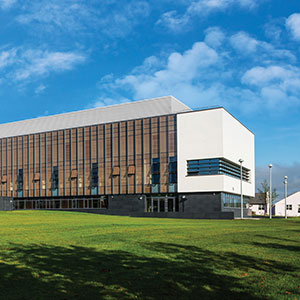
Colleges & Schools
University of Galway has earned international recognition as a research-led university with a commitment to top quality teaching across a range of key areas of expertise.
-
Research & Innovation
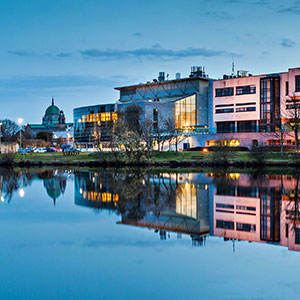
Research & Innovation
University of Galway’s vibrant research community take on some of the most pressing challenges of our times.
-
Business & Industry
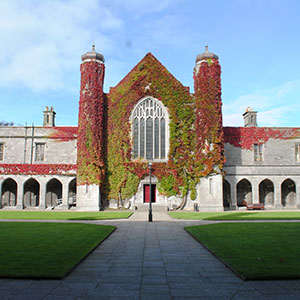
Guiding Breakthrough Research at University of Galway
We explore and facilitate commercial opportunities for the research community at University of Galway, as well as facilitating industry partnership.
-
Alumni & Friends

Alumni & Friends
There are 128,000 University of Galway alumni worldwide. Stay connected to your alumni community! Join our social networks and update your details online.
-
Community Engagement
Community Engagement
At University of Galway, we believe that the best learning takes place when you apply what you learn in a real world context. That's why many of our courses include work placements or community projects.
 Accessibility & Language
September Visitor levy in Ireland could raise more than €200m - research shows
Visitor levy in Ireland could raise more than €200m - research shows
Monday, 28 September 2026
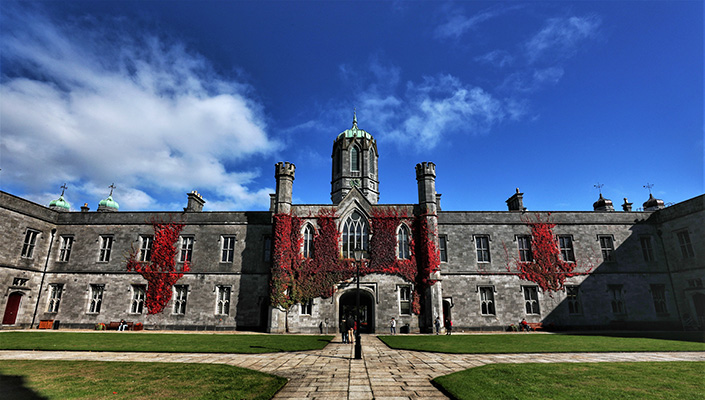
The Quadrangle, University of Galway
Researchers from University of Galway have designed a visitor levy scheme for Ireland that could generate millions of euro in tax revenue for central government and local authorities.
The policy brief ‘Designing a Visitor Accommodation Levy (VAL) for Ireland’ shows that with a well-designed scheme, revenues in excess of €200 million a year could accrue to the local government sector.
In EU countries and in parts of the UK, “visitor levies” or “tourist taxes” charged by local councils on overnight paid accommodation are common. Ireland does not impose these levies. Both the 2024 Dublin City Taskforce and the 2026 Local Democracy Taskforce have recommended a levy on overnight stays.
The research shows that a visitor levy would meet two objectives set out in the Programme for Government 2025 - Securing Ireland’s Future, namely, to broaden the tax base and to strengthen local democracy.
The key design features of a Visitor Accommodation Levy (VAL) are the tax base, liability, coverage, exemptions, tax rate, administration, collection and use of funds. Actual revenues will depend on the base/coverage, the tax rate, exemptions and caps, and could raise an estimated €220 million per annum for the local authorities, according to the findings of the research.
The research was undertaken by Dr Gerard Turley and Stephen McNena from the J.E. Cairnes School of Business & Economics at University of Galway, who also manage the www.localauthorityfinances.com website.
The study used data from Fáilte Ireland's National Quality Assurance Framework registers, which contains 225,098 bedspaces as of January 2026. This figure excludes unregistered B&Bs, short term lets and on-campus student accommodation.
Dr Gerard Turley, Lecturer in Economics at University of Galway, said: “Based on a fixed tax rate per person per night, we estimate that each €1 of a Visitor Accommodation Levy would generate €44 million per annum for the local authorities. A €5 tax rate per person per night would generate almost €220 million for the local government sector. Taking three examples from the 31 local authorities, this translates into €5.7 million for Waterford City and County Councils, €8.2 million for Galway County Council, and €46 million for Dublin City Council.
“For hotels only, our estimates show that a €1 tax rate per person per night would generate the same revenue, circa €33 million, as a 1% room tax rate per night based on 2025/26 data for the number of hotel rooms, occupancy rates and the Average Daily Rate (ADR).”
Stephen McNena, Lecturer in Economics at University of Galway, said: “Our research shows that revenues will depend on the categories of accommodation providers covered in the legislation, as well as the tax rates levied and any exemptions or caps. The choice of tax rate is a percentage rate or a fixed rate, to be applied per person or per room. As both approaches have advantages, we recommend that local authorities have the discretion to choose percentage rate or fixed rate at a level that is appropriate to the local circumstances, the strength of the local tourist sector and the uniqueness of the destination.”
The authors advise that pre- and post-legislative consultation with key stakeholders is essential, including accommodation providers, tourism industry, residents, visitors, business organisations and public representatives.
Additional policy recommendations include:
- Further research is required, including a price sensitivity analysis and an impact assessment study.
- Learning from other visitor levy/tourist tax experiences internationally and recent UK developments.
- The naming of the levy/tax and the ringfencing of revenues are crucial, to ensure transparency and secure acceptance.
- The importance of tax administration, including collection, compliance and enforcement.
- Local discretion is strongly recommended, in terms of an opt-in to a national visitor levy scheme, local rate-setting powers, and determining exemptions and caps.
The full policy brief can be read here.
Ends
Keywords: Press.
Author: Marketing and Communications, NUI Galway
« Back
Related news
23 September 2026
New exhibition celebrating the work of John McGahern opens
22 September 2026
Rinn Medical Devices and Mehta Family Foundation launch Ireland-India Scholars Programme
21 September 2026
Laethanta Oscailte Fochéime Ollscoil na Gaillimhe
21 September 2026
University of Galway opens its doors for Undergraduate Open Days
20 September 2026
University of Galway part of international mission to restore deep-sea coral reefs