-
Courses
Courses
Choosing a course is one of the most important decisions you'll ever make! View our courses and see what our students and lecturers have to say about the courses you are interested in at the links below.
-
University Life

University Life
Each year more than 4,000 choose University of Galway as their University of choice. Find out what life at University of Galway is all about here.
-
About University of Galway
About University of Galway
Since 1845, University of Galway has been sharing the highest quality teaching and research with Ireland and the world. Find out what makes our University so special – from our distinguished history to the latest news and campus developments.
-
Colleges & Schools
Colleges & Schools
University of Galway has earned international recognition as a research-led university with a commitment to top quality teaching across a range of key areas of expertise.
-
Research & Innovation
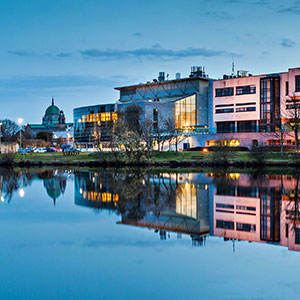
Research & Innovation
University of Galway’s vibrant research community take on some of the most pressing challenges of our times.
-
Business & Industry
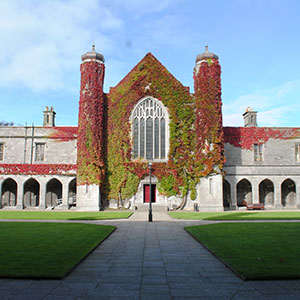
Guiding Breakthrough Research at University of Galway
We explore and facilitate commercial opportunities for the research community at University of Galway, as well as facilitating industry partnership.
-
Alumni & Friends
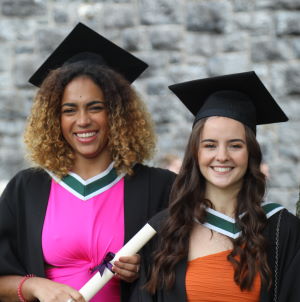
Alumni & Friends
There are 128,000 University of Galway alumni worldwide. Stay connected to your alumni community! Join our social networks and update your details online.
-
Community Engagement
Community Engagement
At University of Galway, we believe that the best learning takes place when you apply what you learn in a real world context. That's why many of our courses include work placements or community projects.
 Accessibility & Language
March Scientists reveal hidden valuable secrets of Pacific coral reefs
Scientists reveal hidden valuable secrets of Pacific coral reefs
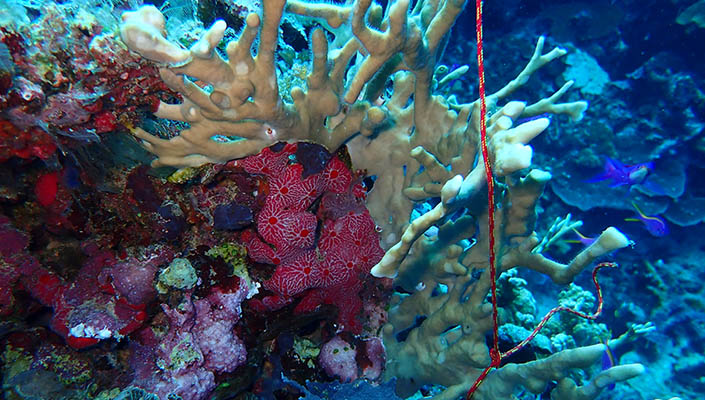
Corals in Papua New Guinea taken during the Tara Pacific expedition in 2017. Credit Olivier Thomas.
Mar
16
2026
Posted: 14:27 GMT
Analysis shows living reef ecosystem host previously unknown biomolecules with potential for future medicine and biotechnology
An international consortium of scientists has uncovered new insights into coral ecosystems, revealing that different coral species host their own distinct communities of microbes.
The research, which involved a team at University of Galway, shows that coral reefs harbour diverse microbes and produce chemicals with promising potential for future application in medicine and biotechnology.
The full study is published in Nature and can be read here.
Coral reefs are often called the rainforests of the sea, supporting a third of all marine macroscopic organisms and operating as marine biodiversity hotspots with a wide range of ecosystem services such as ecotourism and nutrient cycling.
The scientific research has revealed that their true diversity lies in their microbiome - invisible to the naked eye.
With support from the Tara Pacific consortium, the international research team analysed microbiome samples collected from 99 different coral reefs across 32 islands throughout the Pacific Ocean. They reconstructed the genomes of 645 microbial species - more than 99% of which had never previously been genomically characterised. These microbes are highly specialised partners of their coral hosts, functioning as prolific producers of bioactive compounds.
The study revealed that these coral-associated bacteria contain a greater variety of biosynthetic gene clusters - the blueprints for natural products - than has so far been documented in the world’s ocean.
Dr Maggie Reddy, Ryan Institute, University of Galway, said: “When we compared our findings with microbes found on other reef species, it became clear how little we still know. Of more than 4,000 microbial species identified, only 10% have any genetic information available, and fewer than 1% of the species found only in the Tara Pacific samples have been studied at all. This shows a major gap in our understanding and underlines the need for much more biodiversity surveys, especially in under-studied regions.”
The research highlights a critical, often overlooked dimension of conservation: when coral reefs die, we don't just lose the corals, sponges, seaweeds and fish; we lose a vast "molecular library" linked to the microbial life.
And it noted that biochemical characterisation of previously unknown enzymes and compounds suggests an immense, untapped potential for biotechnology and medicine.
Professor Olivier Thomas, Ryan Institute, University of Galway, said: “The biosynthetic potential of reef-building coral microbiomes rivalled or surpassed that of traditional natural product sources like sponges. Among the biosynthetically rich bacteria in the reef microbiome, we identified previously unknown microorganisms (e.g. Acidobacteriota) living with corals that produce new enzymes with exciting potential biotechnology uses.
“The research is a clear call to action to protect our coral reefs – not just because of their value as a unique ecosystem – but to preserve the unique chemical diversity poised to enable future scientific breakthroughs.”
The study involved researchers from the Marine Biodiversity Lab at the Ryan Institute at University of Galway, led by Dr Maggie Reddy and Professor Olivier Thomas, who are part of the Tara Pacific consortium, an international consortium of marine scientists addressing the challenges our oceans face due to climate change. They worked alongside scientists in ETH Zurich.
Dr Reddy and Professor Thomas will join an international team of scientists on the upcoming Tara Coral expedition this June in Papua New Guinea, funded by the Tara Foundation and associated public and private partners. During the voyage, they will collect additional marine samples from the region and investigate the factors that enable certain reef-building corals to be more resilient in the face of climate change.
The coral microbiome is a complex community of bacteria, archaea, fungi, viruses, and algae that live on and within coral tissues, acting as a crucial, functional unit known as the holobiont.
The microbiome samples studied in this research, published in Nature, were collected during the Tara Pacific expedition in 2016-2018. This work has mapped the microbial landscape of reef-building corals at an unprecedented scale in an ocean which is home to 40% of the world’s coral reefs.
For more information about the Tara Foundation and the Tara Coral expedition to the Coral Triangle in 2026-2027 visit: https://fondationtaraocean.org/en/expedition/tara-coral/
Ends