-
Courses
Courses
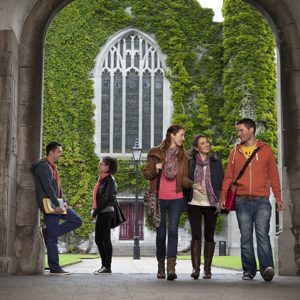
Choosing a course is one of the most important decisions you'll ever make! View our courses and see what our students and lecturers have to say about the courses you are interested in at the links below.
-
University Life

University Life
Each year more than 4,000 choose University of Galway as their University of choice. Find out what life at University of Galway is all about here.
-
About University of Galway

About University of Galway
Since 1845, University of Galway has been sharing the highest quality teaching and research with Ireland and the world. Find out what makes our University so special – from our distinguished history to the latest news and campus developments.
-
Colleges & Schools
Colleges & Schools
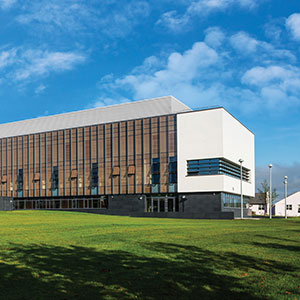
University of Galway has earned international recognition as a research-led university with a commitment to top quality teaching across a range of key areas of expertise.
-
Research & Innovation

Research & Innovation
University of Galway’s vibrant research community take on some of the most pressing challenges of our times.
-
Business & Industry
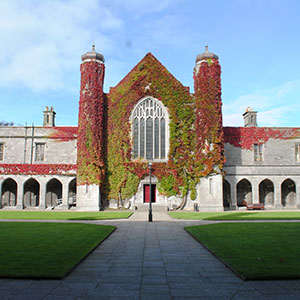
Guiding Breakthrough Research at University of Galway
We explore and facilitate commercial opportunities for the research community at University of Galway, as well as facilitating industry partnership.
-
Alumni & Friends

Alumni & Friends
There are 128,000 University of Galway alumni worldwide. Stay connected to your alumni community! Join our social networks and update your details online.
-
Community Engagement
Community Engagement
At University of Galway, we believe that the best learning takes place when you apply what you learn in a real world context. That's why many of our courses include work placements or community projects.
 Accessibility & Language
Micro-credentials
Course Overview

Applications for CELT Programmes AY 2026/2027 will open March 2026. For further information please contact celt@universityofgalway.ie
CELT offers a number of individual short-courses (typically 1 Semester in length) which can be taken out of interest, for continuing professional development, or stacked towards the PgDip award. We review and revise our offerings to reflect areas of interest and new developments in higher education and academic practice. The availability of any particular micro-credential or module may depend on demand, resourcing, and scheduling constraints.
The modules/micro-credentials within our current listing are (all at 10 ECTS, NFQ Level 9):
CEL264 Supporting Student Learning
Semester 2: ON CAMPUS Thursdays, fortnightly 14:00-16:30 from 14th January, 2027
This module covers a wide range of topics that are relevant to student academic success. Many of these are contextual factors that can serve as barriers or stressors for students, whilst others might be enablers of success. Participants explore these aspects together as a group and are informed by a number of guest speakers, from across the wide range of support services in the university, as well as by engaging with the literature and current policy debates
There is scope for discussion, discovery, and analysis, in a friendly and supportive atmosphere. All discussions in class, and in the online discussion area, are private, within the group and the course team. This offers a safe space for honest and open discussion, with empathy and respect for one another.
CEL277 Independent Study
Over the course of the academic year. Information Session 11:00 Friday 18th September, 2026 ON CAMPUS AMB1006
This is an independent study module, allowing participants to design and undertake a small-scale enquiry of their own choosing. A variety of topics and approaches is possible, and whilst there are no taught sessions, an information meeting will be held early in the academic year for those interested in pursuing their own project. Essential information is provided via Canvas. The module runs across the academic year, to allow colleagues to join on a rolling basis to suit workload constraints.
CEL6103 Research Supervision & Development
Semester 1: ONLINE Thursdays, fortnightly 11:00 from 17th September, 2026 until 10th December, 2026
The curriculum falls in two parts: an initial focus on your own research career development, before undertaking a detailed exploration of postgraduate supervision practices.
CEL6108 Collegiality, Leadership & Management
Semester 2: ON CAMPUS Thursdays, fortnightly 14:00-16:30 from 21st January, 2027
In this course we will explore a wide range of topics, including:
- models of leadership and their application to the HE context;
- the Irish HE context: governance, funding, policy;
- developing and supporting teams, groups and organisations;
- strategy, planning, and evaluation;
- leading and managing courses and programmes;
- engagement collaboration, community, and culture.
The course has a number of guest speakers from key management and leadership positions in the university, and includes guided reading and the development of a personal leadership profile.
CEL6109 Sustainability in the Curriculum
Semester 1: ON CAMPUS Wednesdays, fortnightly 14:00-16:30 from 9th September, 2026 until 2nd December, 2026
This module aims to unpack the varying definitions and principles of the concept of sustainability and provides a space for participants to embed sustainability into their own teaching and learning practice.
Topics to be explored include pedagogical approaches for sustainability; teaching techniques for embedding sustainability into the curriculum; digital tools for embedding the SDGS into university modules; learning how to provide safer spaces for students to voice fears and anxieties about the climate crisis. Participants of this module will be encouraged to apply their learning in their own subject area.
CEL6110 Assessment in Higher Education (New 2026)
Semester 2: ON CAMPUS fortnightly from January 2027 (Final dates and times tbc).
This module recognises assessment as a powerful tool in education - to promote and guide learning, to develop skills of self-appraisal, to mark checkpoints in a students’ learning journey and to ensure students have achieved their programme outcomes and graduate with an award. It also recognises the challenges faced since the Covid pandemic of 2020 and the advent of GenAI.
The module is an opportunity for lecturers to explore assessment in more depth, return to the basics of how formative and summative assessment can work together to promote student engagement and learning, learn about alternatives to their traditional approaches to assessment, and consider the security of different approaches in a GenAI world.
Course Overview:
Participants will engage in seven workshop-style sessions, that encourage interrogation of assessment practices in higher education. Independently, they will engage with the current literature on assessment, feedback, academic integrity, authentic assessment, alternative forms of marking and other topics as appropriate. A major focus of the module will be to help staff build assessment and feedback literacies and to apply these to their own teaching.
Topics to be explored will include: assessment of, for and as learning, authentic assessment, assessing online, assessing large classes, feedback and feedforward, programme-focused assessment, synoptic assessment, academic integrity considerations, different approaches to marking, rubrics, and the impact of GenAI on assessment.
CEL6111 Digital Education for Teaching and Learning (New 2026)
Semester 1: ON CAMPUS fortnightly from September 2026 (Final dates and times tbc).
This 10 ECTS module is designed for academic staff in Irish higher education who wish to develop a critical, reflective, and practice-oriented understanding of educational technologies for teaching and learning. The module explores both the practical use of learning technologies - such as generative AI, podcasting, video production, open educational resources (OER), and digital learning platforms - along with considering the theoretical and critical perspectives that shape contemporary debates in educational technology. This includes, for example, the impact of Artificial Intelligence on both teaching and student learning. Drawing on key scholarship and theory, the module foregrounds questions of pedagogy and institutional context in technology-enhanced learning.
Participants will engage with developing their own digital competencies, along with engaging with models of on-campus, online and blended teaching, and will develop evidence-informed approaches to designing, facilitating, and evaluating digital learning experiences. The module adopts an applied, inquiry-based approach, combining lectures, workshops, guest speakers, and guided independent learning. Assessment is structured to support professional practice, critical reflection, and the creation of high-quality digital learning materials. Skills and knowledge developed across the semester culminate in a final integrative assignment demonstrating attainment of the module learning outcomes.