-
Courses
Courses
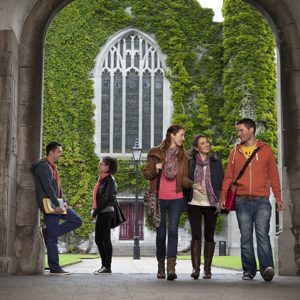
Choosing a course is one of the most important decisions you'll ever make! View our courses and see what our students and lecturers have to say about the courses you are interested in at the links below.
-
University Life

University Life
Each year more than 4,000 choose University of Galway as their University of choice. Find out what life at University of Galway is all about here.
-
About University of Galway

About University of Galway
Since 1845, University of Galway has been sharing the highest quality teaching and research with Ireland and the world. Find out what makes our University so special – from our distinguished history to the latest news and campus developments.
-
Colleges & Schools
Colleges & Schools
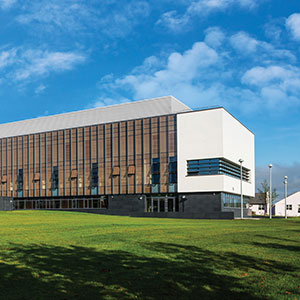
University of Galway has earned international recognition as a research-led university with a commitment to top quality teaching across a range of key areas of expertise.
-
Research & Innovation

Research & Innovation
University of Galway’s vibrant research community take on some of the most pressing challenges of our times.
-
Business & Industry
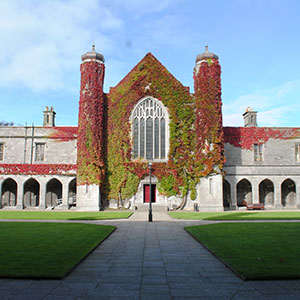
Guiding Breakthrough Research at University of Galway
We explore and facilitate commercial opportunities for the research community at University of Galway, as well as facilitating industry partnership.
-
Alumni & Friends

Alumni & Friends
There are 128,000 University of Galway alumni worldwide. Stay connected to your alumni community! Join our social networks and update your details online.
-
Community Engagement
Community Engagement
At University of Galway, we believe that the best learning takes place when you apply what you learn in a real world context. That's why many of our courses include work placements or community projects.
 Accessibility & Language
March Invasive Noble false widow now among the most common spiders in Irish cities
Invasive Noble false widow now among the most common spiders in Irish cities
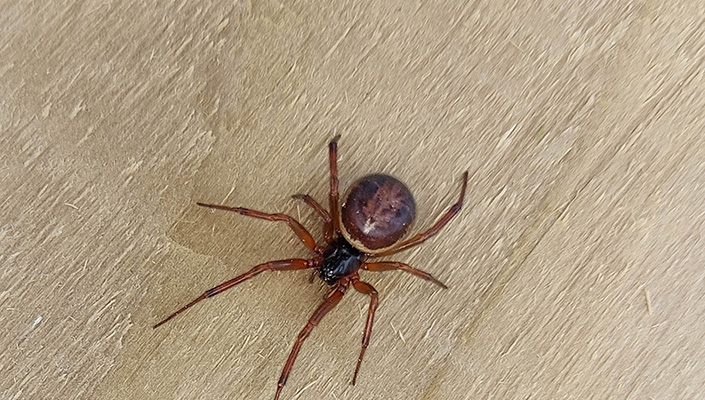
Mature female False Widow Spider (Steatoda nobilis). Credit - JP Dunbar
Mar
25
2026
Posted: 14:35 GMT
Nationwide survey shows invasive spider thriving in urban centres
The invasive Noble false widow spider (Steatoda nobilis) is now one of the most common urban spiders in Ireland, according to a new study by researchers at the University of Galway.
Researchers surveyed urban spider populations across the Republic of Ireland to identify the most common species and the environmental factors influencing their diversity and abundance.
The study found that the Noble false widow and the long-established missing sector orb weaver (Zygiella x-notata) accounted for more than 80% of urban spider populations. Remarkably, the Noble false widow is now well established even in counties such as Mayo and Sligo, where it was previously unrecorded.
The findings, been published in Ecology and Evolution, highlight Ireland’s understudied urban habitats, as well as the potential negative impact of the Noble false widow on native spider species
Brandon Collier, doctoral researcher at University of Galway and first author of the study, said: “This research provides a framework for studying a largely overlooked habitat for invasive and medically important species. As human populations increase year after year, urban areas grow with them. Understanding the impact this has on native species in Ireland provides essential knowledge for preventing and managing invasions in more fragile environments like Australia, New Zealand, and Japan.”
Rapid global trade has allowed more spider species to spread beyond their native ranges to become cosmopolitan and, occasionally, invasive. False widows and their relatives, the black widows, have led this trend, with implications for human and environmental health.
While the strong venom potency and medical importance of certain widow spiders is well documented, their ecological impact has been harder to determine.
To better understand urban spider populations, researchers developed a visual survey framework that could be applied internationally to monitor invasive species.
The scientists are calling for the Noble false widow spider to be officially recognised as an invasive species under the UN Convention on Biological Diversity’s guidelines because of its rapid spread and potential impact on native spiders.
The research was carried out by established and postgraduate scientists from the University of Galway, with funding through the University’s Hardiman Scholarship held by Brandon Collier.
Mr Collier added: “Now more than ever, we need to evaluate the threat of potentially invasive spider species and formulate a global action plan to prevent negative impacts on sensitive native species. Collaborating with international research groups has allowed us to begin the dialogue, but implementing policy changes in affected regions is essential to preventing future wide-spread invasions.”
Dr Michel Dugon, Head of the Venom Systems Lab at University of Galway and senior author of the study, said: “The populations of Noble false widows have exploded throughout Western Europe in the past two decades, and the species has been recently observed in New Zealand, South America, the US, and North Africa. Our next step is to understand the physiological adaptations of the species to better predict other areas at risk of invasion.”
Dayle Leonard, doctoral researcher at University of Galway and co-author of the study, said: “This research highlights a threat to biodiversity that is largely ignored. We were able to show how though Irish weather varies greatly, spider diversity is more affected by the seasons, food, and, potentially, the presence of the invasive Noble false widow spider. There are global implications with the spread of the Noble false widow across continents, so providing insight into its dominance and its impact in urban environments is vital.”
The full study in Ecology and Evolution is available at https://doi.org/10.1002/ece3.73193.
Ends
Related News
15 October 2026
Ollscoil na Gaillimhe ag ceiliúradh agus beagnach 2,800 duine ag fáil a gcéime ag na searmanais bhronnta
15 October 2026
University of Galway celebrates almost 2,800 graduates at conferring ceremonies
14 October 2026
University of Galway awarded Jean Monnet Centre of Excellence
13 October 2026
European research partnership to strengthen child protection and wellbeing
9 October 2026
Atlantic Summit Galway 2026 concludes with release of Statement to support a sustainable and prosperous ocean future
Featured Stories
Thursday,
15
October
2026
Ollscoil na Gaillimhe ag ceiliúradh agus beagnach 2,800 duine ag fáil a gcéime ag na searmanais bhronnta
Thursday,
15
October
2026
University of Galway celebrates almost 2,800 graduates at conferring ceremonies
Wednesday,
14
October
2026