-
Courses

Courses
Choosing a course is one of the most important decisions you'll ever make! View our courses and see what our students and lecturers have to say about the courses you are interested in at the links below.
-
University Life

University Life
Each year more than 4,000 choose University of Galway as their University of choice. Find out what life at University of Galway is all about here.
-
About University of Galway

About University of Galway
Since 1845, University of Galway has been sharing the highest quality teaching and research with Ireland and the world. Find out what makes our University so special – from our distinguished history to the latest news and campus developments.
-
Colleges & Schools
Colleges & Schools
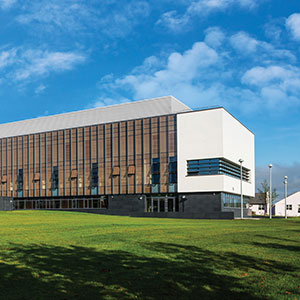
University of Galway has earned international recognition as a research-led university with a commitment to top quality teaching across a range of key areas of expertise.
-
Research & Innovation

Research & Innovation
University of Galway’s vibrant research community take on some of the most pressing challenges of our times.
-
Business & Industry
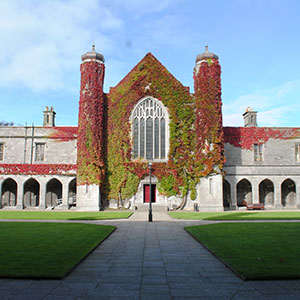
Guiding Breakthrough Research at University of Galway
We explore and facilitate commercial opportunities for the research community at University of Galway, as well as facilitating industry partnership.
-
Alumni & Friends
Alumni & Friends
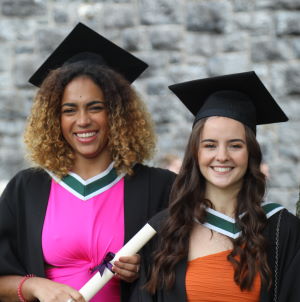
There are 128,000 University of Galway alumni worldwide. Stay connected to your alumni community! Join our social networks and update your details online.
-
Community Engagement
Community Engagement
At University of Galway, we believe that the best learning takes place when you apply what you learn in a real world context. That's why many of our courses include work placements or community projects.
 Accessibility & Language
Doctoral Researchers
Rima Nusantriani Banurea (2026 – present)
Project title: The Untold Stories of Intimate Partner Violence (IPV) in Jayapura City, Papua, Indonesia
Intimate Partner Violence (IPV) in Jayapura, Papua, is an urgent issue and happens in a daily basis. As the result from previous studied the percentage of no violence in intimate relationships in Jayapura is 29.3% lower than other parts of Indonesia which is 58.7% in countryside and 51.2% in urban site (Fulu et al, 2013). Some interventions have already taken place to stop IPV in Papua, such as new laws, police training, and government and NGO Programs, but it continues to worsen. Therefore, research that analyses the causes deeply, beyond who the perpetrator is and who the victims need to be conducted. Using a narrative method combined with an ethnography method, this research aims to find out the roots of this problem, including social contexts, cultural norms, and perspectives form victims and perpetrators. As a citizen of Indonesia who has lived in Papua most my life, I am familiar with the cultural context, have many existing contacts to begin my study, and speak the local language. As a sociology graduate who focuses on gender studies, I have familiarity with qualitative and social theory related to IPV.
- Funding: Indonesia Endowment Fund for Education Agency (LPDP)
- Project Supervisor: Professor Nata Duvvury
Jacob Conneely (2026- present)
Project title: The Pill Pipeline: An exploration of incel cohorts and how their experiences influence their trajectory to other pills in the Irish context
The aim of this study is to examine the blue, red, and black pills as they relate to inceldom in the Irish context. It will examine factors influencing patterns of radicalisation, stagnation, and deradicalisation, incorporating self-reported perspectives on their own and other pill identities via structured survey instruments to explore how personal dynamics influence cohort affiliation and shape ideological trajectory. The research is interdisciplinary and will focus on economic, sociological, and technological perspectives.
- Project Supervisor: Dr Stacey Scriver
Mohamad Hairun Sihaliata (January 2025 – present)
Project title: Enhancing Special Autonomy Outcomes through Indigenous Papuans’ Engagement in Participatory Development Planning
The proposed research project titled " Enhancing Special Autonomy Outcomes through Indigenous Papuans’ Engagement in Participatory Development Planning” outlines the disconnect between government and indigenous Papuan on the implementation of asymmetrical decentralization or also known as special autonomy (SA) in Papua Indonesia. SA is a national policy in Indonesia that grants Papua distinct administrative, political, and fiscal privileges to address severe development gaps and historical ethnic conflict. Addressing the disconnect between government implementation and indigenous dissatisfaction over fund distribution, this project aims to enhance participatory planning so that community aspirations translate directly into tangible outcomes. To achieve this, the initiative evaluates how participatory planning is currently implemented and understood, formulates strategies to bridge gaps between government practices and indigenous expectations, and examines the direct impact of local participation on Special Autonomy outcomes while establishing indicators to measure its effectiveness.
- Funding: Indonesia Endowment Fund for Education Agency (LPDP Scholarship under Ministry of Finance, Indonesia)
- Project Supervisor: Professor Nata Duvvury