-
Courses

Courses
Choosing a course is one of the most important decisions you'll ever make! View our courses and see what our students and lecturers have to say about the courses you are interested in at the links below.
-
University Life

University Life
Each year more than 4,000 choose University of Galway as their University of choice. Find out what life at University of Galway is all about here.
-
About University of Galway
About University of Galway
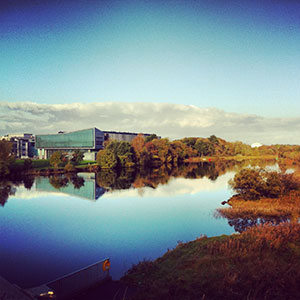
Since 1845, University of Galway has been sharing the highest quality teaching and research with Ireland and the world. Find out what makes our University so special – from our distinguished history to the latest news and campus developments.
-
Colleges & Schools
Colleges & Schools
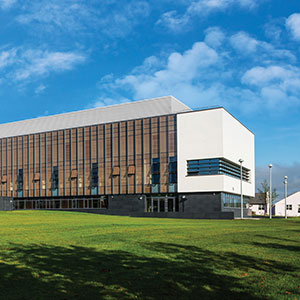
University of Galway has earned international recognition as a research-led university with a commitment to top quality teaching across a range of key areas of expertise.
-
Research & Innovation

Research & Innovation
University of Galway’s vibrant research community take on some of the most pressing challenges of our times.
-
Business & Industry
Guiding Breakthrough Research at University of Galway
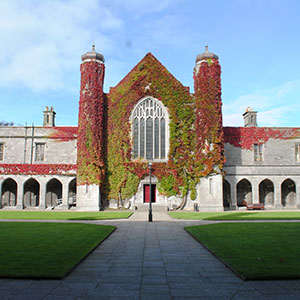
We explore and facilitate commercial opportunities for the research community at University of Galway, as well as facilitating industry partnership.
-
Alumni & Friends

Alumni & Friends
There are 128,000 University of Galway alumni worldwide. Stay connected to your alumni community! Join our social networks and update your details online.
-
Community Engagement
Community Engagement
At University of Galway, we believe that the best learning takes place when you apply what you learn in a real world context. That's why many of our courses include work placements or community projects.
 Accessibility & Language
Aeration System Performance Optimisation
PROJECT OVERVIEW
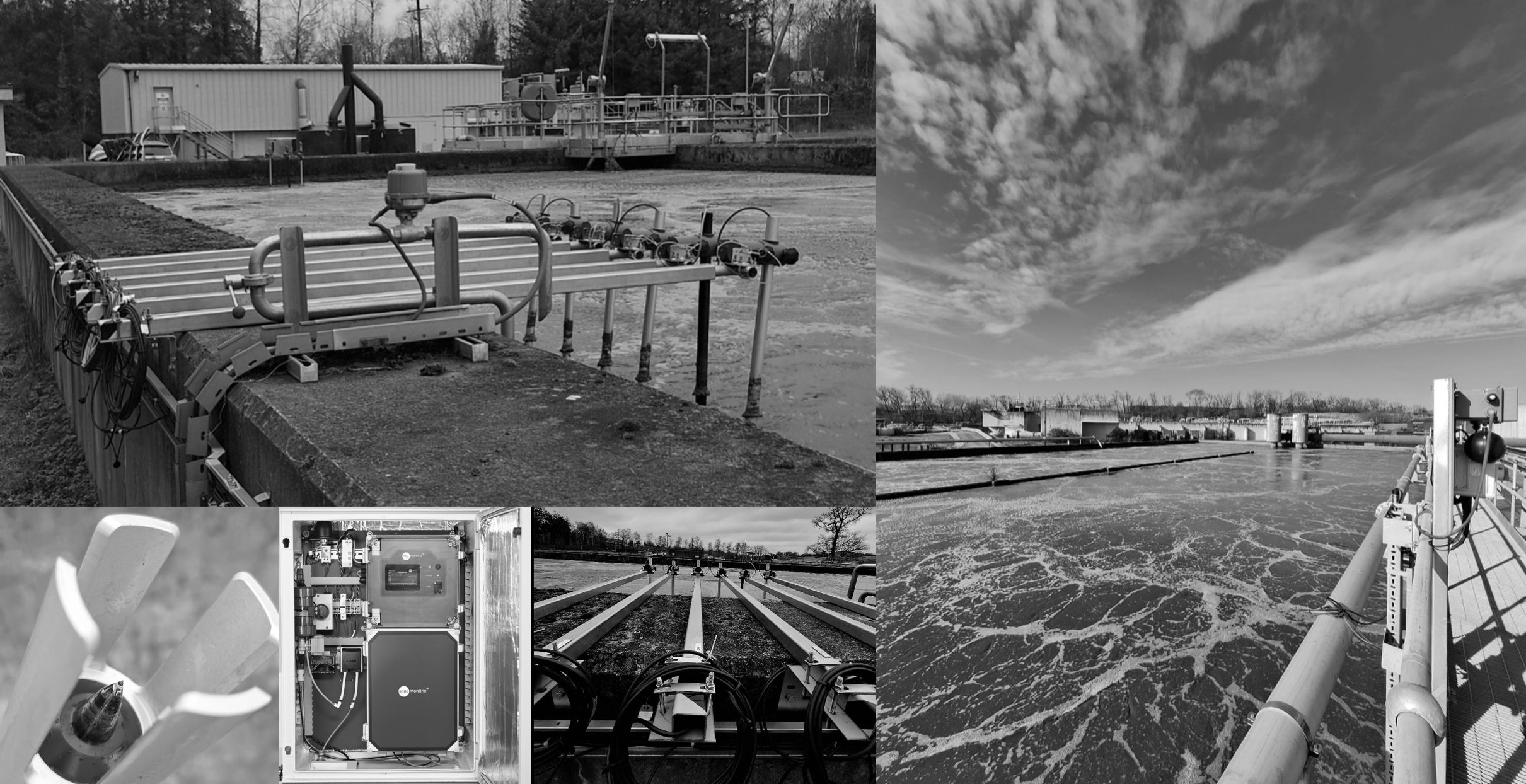
This project investigates how wastewater treatment plant aeration can be optimised to reduce energy use and greenhouse gas emissions. It combines long-term monitoring at Enniscorthy WWTP and shorter-term studies at Ballina-Killaloe WWTP, using advanced sensor networks and process modelling to understand and improve real-time plant performance. The research develops data-driven control strategies while addressing challenges in sensor reliability, data quality, and system variability.
WHY IT MATTERS
- Aeration accounts for 50–75% of wastewater treatment energy use, making it the key target for efficiency improvements.
- Wastewater processes can generate nitrous oxide (N₂O), a potent greenhouse gas.
- Optimisation reduces both energy consumption and emissions while maintaining treatment quality.
- Provides real-world evidence from Irish treatment plants to support operational improvements.
- Supports smarter, data-driven wastewater infrastructure and improved emissions reporting.
ABSTRACT
Aeration is the most energy-intensive process in wastewater treatment, typically accounting for 50-75% of total plant electricity consumption, while also contributing to greenhouse gas emissions through the production of nitrous oxide (N₂O). This research project investigates how advanced monitoring, modelling, and control strategies can improve aeration system performance, reducing energy consumption and process emissions without compromising effluent quality.
The project combines long-term monitoring at Enniscorthy Wastewater Treatment Plant (26,800 PE) and shorter-term monitoring at Ballina-Killaloe Wastewater Treatment Plant (8,400 PE). A comprehensive instrumentation network has been deployed, including sensors for dissolved oxygen, ammonia, nitrate, nitrite, oxidation-reduction potential, pH, conductivity, mixed liquor suspended solids, and aqueous N₂O. These systems provide high-resolution data on process performance and environmental impact under real operating conditions.
Research activities focus on identifying the operational and biological factors influencing N₂O formation, evaluating plant energy consumption in response to process changes, and developing data-informed control strategies for aeration optimisation. A calibrated process model of Enniscorthy WWTP has been developed to test control modifications prior to full-scale implementation.
The project also addresses challenges associated with the use of online process data, including fault detection, data quality screening, and data gap management. Future work will incorporate gas-phase emissions monitoring to improve understanding of emission pathways and support the development of reliable monitoring methodologies.
The outcomes of this research will provide practical guidance for wastewater treatment plant operation, support the development of representative emissions inventories and emission factors, and contribute to more energy-efficient and environmentally sustainable wastewater treatment systems. The monitoring programmes at Enniscorthy and Ballina represent some of the first long-term studies of wastewater process emissions in Ireland and provide a foundation for future sector-wide emissions and energy reduction strategies.
Supervisors:
Dr Eoghan Clifford, Ph.D, Civil Engineering, University of Galway
Dr James McDermott, B.Sc., PhD, Computer Science, University of Galway
Dr Brian Sheil, BE, Ph.D., University of Galway

Chloe Dalton | Mechanical & Process Engineer
Chloe Dalton is a Mechanical & Process Engineer with Ward & Burke and a PhD researcher in Process and Civil Engineering at the University of Galway. She has a multidisciplinary background spanning construction, medical device process development, and the delivery, commissioning and optimisation of water resource recovery facilities (WRRFs), with experience supporting plant operations and performance improvement. Her research focuses on the optimisation of wastewater treatment processes through advanced monitoring, data analytics, process modelling, and real-time control strategies. Chloe's work investigates the relationship between aeration system operation, energy consumption, and nitrous oxide emissions in full-scale wastewater treatment plants. By combining long-term field monitoring, high-frequency sensor networks, and process modelling. She develops practical strategies to improve energy efficiency and reduce greenhouse gas emissions. Working at the interface of industry and academia, Chloe leads site logistics and coordination, acts as the operational link between project partners, and manages on-site sensor installation and process data collection.in Connect with Chloe
Publications
Rodrigues, B., Dalton, C., & Clifford, E. (2026). Guide to monitoring nitrous oxide process emissions in wastewater: Lessons from an ongoing monitoring programme in Enniscorthy wastewater treatment plant in Ireland. University of Galway and Ward and Burke Construction Limited