-
Courses

Courses
Choosing a course is one of the most important decisions you'll ever make! View our courses and see what our students and lecturers have to say about the courses you are interested in at the links below.
-
University Life

University Life
Each year more than 4,000 choose University of Galway as their University of choice. Find out what life at University of Galway is all about here.
-
About University of Galway
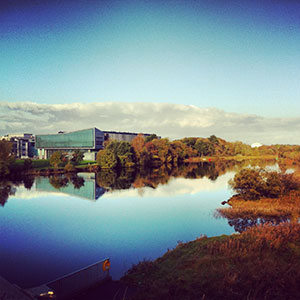
About University of Galway
Since 1845, University of Galway has been sharing the highest quality teaching and research with Ireland and the world. Find out what makes our University so special – from our distinguished history to the latest news and campus developments.
-
Colleges & Schools
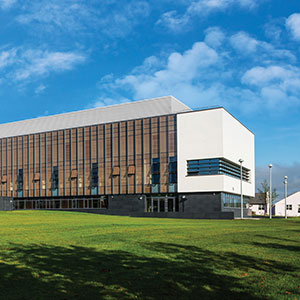
Colleges & Schools
University of Galway has earned international recognition as a research-led university with a commitment to top quality teaching across a range of key areas of expertise.
-
Research & Innovation
Research & Innovation
University of Galway’s vibrant research community take on some of the most pressing challenges of our times.
-
Business & Industry
Guiding Breakthrough Research at University of Galway
We explore and facilitate commercial opportunities for the research community at University of Galway, as well as facilitating industry partnership.
-
Alumni & Friends

Alumni & Friends
There are 128,000 University of Galway alumni worldwide. Stay connected to your alumni community! Join our social networks and update your details online.
-
Community Engagement
Community Engagement
At University of Galway, we believe that the best learning takes place when you apply what you learn in a real world context. That's why many of our courses include work placements or community projects.
 Accessibility & Language
SEASON
About Project
Methane (CH₄) is the second most important anthropogenic greenhouse gas after carbon dioxide and a key driver of near-term climate change. It is emitted from both natural sources (wetlands, termites, wildfires) and human activities, with the largest anthropogenic sources being agriculture (especially livestock and manure), fossil-fuel production and distribution, waste (landfills and wastewater), and biomass. Ireland has relatively high emissions per capita due mainly to its large agricultural sector. Most Irish methane comes from enteric fermentation in cattle and sheep, manure management, and smaller contributions from waste, gas distribution, and wetlands. Measuring atmospheric methane across Ireland is also scientifically valuable: observed concentrations reflect the combined influence of local emissions, regional transport, Atlantic background air, boundary-layer mixing, and meteorological conditions. Robust methane estimates are therefore essential for designing realistic mitigation strategies. Better understanding methane over Ireland can also improve policy confidence, distinguish domestic emissions from transported methane, quantify seasonal variability, and assess whether mitigation actions are actually reducing emissions over time. The overall aim of the project is to identify methane sources, sinks and hot spots in Ireland by deploying and further developing a state-of-the-art methane emissions verification system that consists of the operational network of precise long-term Methane measurements, a top-down inversion model, and suitable satellite data.
Key Objectives
- Improve the Methane inversion system using new and innovative satellite data in order to characterise and reduce uncertainty associated with top-down emission verification.
- Mapping of hot spots of methane emissions in Ireland or international emissions hotspots influencing observations in Ireland.
- Determine factors that influence the observed levels of methane in Ireland (both anthropogenic and natural).
- Compare and contrast top down and bottom-up methodologies in order to identify areas of uncertainty and facilitate reconciliation of both techniques to understand methane emission patterns in Ireland and to provide scientific evidence for emissions reductions options.
- The overall aim of the project is to identify methane sources, sinks and ‘hot spots’ in Ireland by deploying and further developing state of the art methane emissions verification system.
Expected outcomes
SEASON project will deliver :
- Trends in Irish methane emissions.
- Methane fluxes for Ireland.
- Top-down estimates of methane constrained using available satellite data.
- Characterisation of methane hotspots.
- A more complete understanding of Irish methane emissions and sinks.
Funding Agency
SEASON is funded by the Environmental Protection Agency (EPA) Ireland under the EPA Research Programme.
Contact us
We welcome inquiries about the project. Please contact:
Dr. Nikhil Korhale
Postdoctoral Researcher
Centre for Climate and Air Pollution Studies (C-CAPS)
Physics, School of Natural Sciences
University of Galway
Galway. Irelnd
Email: nikhil.korhale@universityofgalway.ie